
China's credit push meets cautious Hong Kong land supply
Investors need to know whether Beijing's support is creating demand or merely absorbing weakness.
 Odile MarchettiCentral banks, rates and sovereign debt

China's first nine-month loan total and Hong Kong's two-parcel land-sale plan show a stabilization effort that is visible but not yet convincing. Weak domestic demand, local-government debt and a sharp fall in non-bank deposits complicate the picture, even as the VIX reads calm. For investors, the issue is whether policy support is creating real demand or merely managing the drag.
The VIX closed at 16.87 on 14 October. That is a calm reading for a volatility gauge, and it sits oddly beside a story about weak domestic demand, local-government debt and falling non-bank deposits. The central figures are exact, but they do not yet assemble into a clean recovery.
China's yuan-denominated loans increased by 11.52 trillion yuan in the first nine months of 2026. The figure is large in isolation, but there is no year-over-year comparison and no stated forecast, so it cannot be judged as strong, weak or sufficient. For investors, the mechanism matters more than the level: credit supports growth only when it moves through borrowers into spending, investment and consumption.
Beijing has introduced a series of growth-stabilization measures. Weak domestic demand and local-government debt are weighing on those efforts. That combination points to a familiar constraint: policy can encourage lending, but it cannot force cautious households or borrowers to borrow and spend if their balance sheets are already strained.
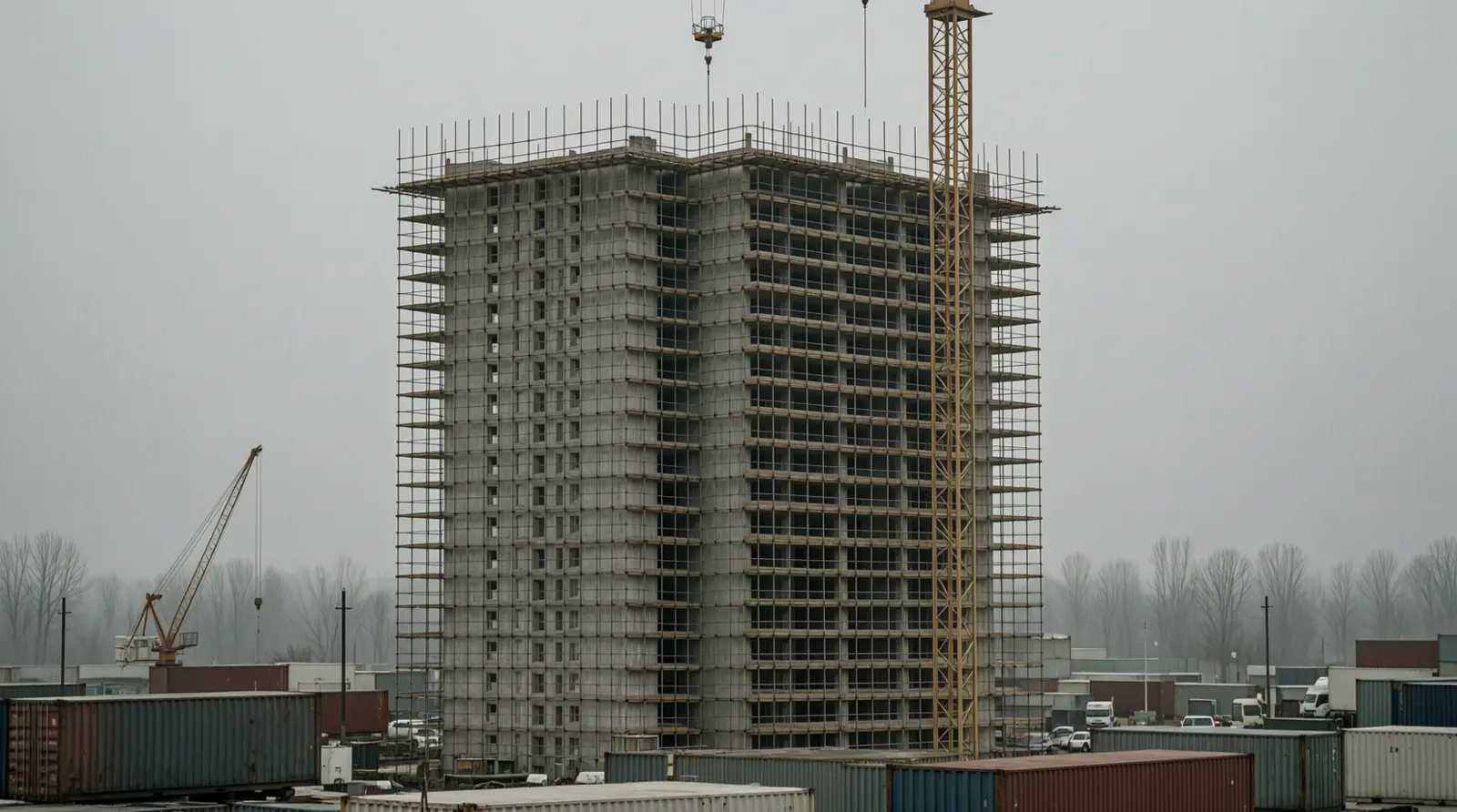
A loan total is not a growth signal
The 11.52 trillion yuan loan figure may reflect policy direction, but it does not show who is borrowing or what the funds are financing. If credit is flowing into refinancing rather than new activity, the growth effect is muted. The absence of a comparison period is the missing piece: a similar volume would mean little if it merely matched prior years, while a sharp increase would still need to be traced into demand.
The missing context is not a footnote; it is the difference between a recovery and a managed pause.
September non-bank deposits fell sharply. That can matter because non-bank deposits often sit closer to market funding and risk-taking than ordinary household savings. But the figure lacks a magnitude, a base and a definition of sharp, so the signal is directional rather than measurable. It raises a question about funding conditions without answering it.
A calm VIX does not settle the China question
The VIX reading of 16.87 is useful only as a statement about market volatility, not as proof that China's credit cycle has turned. Low volatility can coexist with weak demand and cautious balance-sheet behaviour. It can also reflect investor positioning, liquidity or expectations of policy support rather than an improvement in underlying growth.
The market signal and the credit signal therefore need not contradict each other. Equities can be calm while banks, local governments and borrowers remain cautious. The stronger inference is not that stress is absent, but that the figures do not yet show whether stabilization is gaining traction.
Hong Kong is testing land demand with two parcels
Hong Kong's housing market is said to have rebounded. The city plans to release two land parcels for sale in the fourth quarter of 2026: one residential development and one student-hostel project. A rebound in housing does not automatically require a large land release; a government can move slowly if it wants to test market appetite or avoid oversupply.
The two parcels are also different in kind. A residential site speaks to conventional home demand, while a student-hostel project points to a narrower operational use. That mix does not prove caution by itself, but it does not look like a broad attempt to flood the market with new supply.
For China-linked equities and credit, the practical question is whether policy support can outrun the drag from weak demand and local debt. The loan number, the deposit drop and the land-sale plan each point to a stabilization effort that is underway but not yet validated. The missing context is not a footnote; it is the difference between a recovery and a managed pause.
- 01The VIX closed at 16.87 on 14 October.
- 02China's yuan-denominated loans rose by 11.52 trillion yuan in the first nine months of 2026.
- 03Beijing has introduced growth-stabilization measures.
- 04Hong Kong plans two land parcels for sale in the fourth quarter of 2026.
- 05September non-bank deposits fell sharply.
Interpretation, not reporting. The facts above carry their tiers; this is one correspondent’s reading of them.
The burden of proof is on Beijing's stabilization effort, not on the headline loan total. I would treat the 11.52 trillion yuan figure as a policy signal, not evidence that demand has returned, because it lacks a year-over-year anchor and says nothing about who is borrowing. The calm VIX reading of 16.87 does not settle the issue either: low volatility can sit beside weak domestic demand and local-government debt without contradiction. Hong Kong's two fourth-quarter parcels, one residential and one student hostel, look like a controlled test rather than confirmation of a strong housing rebound. I would watch whether future credit is matched by spending and whether land sales attract genuine developer interest. If those channels remain quiet, the stabilization measures may simply be absorbing the drag. If borrowing broadens beyond refinancing and Hong Kong land demand surprises, I would revise that caution.
— Odile Marchetti
Every claim in this article, and what it rests on
We do not ask you to take our word for it. Each statement below carries its tier and its sources. Where sources disagree, you get both accounts and what would settle it.
The VIX closed at 16.87 on 2026-10-14.
China’s yuan-denominated loans increased by 11.52 trillion yuan in the first nine months of 2026.
China has introduced a series of growth-stabilization measures.
Weak domestic demand and local-government debt are weighing on China’s growth-stabilization efforts.
Hong Kong’s housing market has rebounded.
Hong Kong plans to release two land parcels for sale in the fourth quarter of 2026.
The two planned Hong Kong land parcels include one residential development and one student-hostel project.
September non-bank deposits fell sharply.
The case against this story
Written by an adversarial reviewer, not the correspondent
The story stitches together precise numbers (11.52 trillion yuan in loans, VIX at 16.87, two land parcels) with vague analytical language ('rebounded,' 'fell sharply,' 'weighing on') to build a narrative of China struggling but recovering. The precision of the hard numbers lends false credibility to the soft claims—a reader assumes that if the loan figure is exact, the housing 'rebound' must be equally well-sourced, but no definition of rebound is offered. Internally, the picture contradicts itself: a VIX reading of 16.87 signals low market volatility, yet the story simultaneously claims non-bank deposits 'fell sharply' and growth is under pressure—acute financial stress normally drives volatility up, not down. If Hong Kong's housing market had genuinely rebounded, releasing only two land parcels in Q4 looks cautious, not confident, suggesting the rebound (if real) is tepid enough that the government is managing supply carefully. The 11.52 trillion yuan loan figure is presented with no year-over-year comparison or analyst expectation, so a reader cannot tell whether it exceeds, meets, or falls short of forecasts. Every key data point lacks the context needed to interpret it, and undefined adjectives are doing the narrative heavy lifting that specific figures should be doing instead.
Who benefits from this framing: This framing benefits parties with an interest in portraying China and Hong Kong as on a recovery path despite headwinds. Hong Kong property developers and the HK government benefit from the 'housing market has rebounded' narrative, which supports confidence in the two planned land sales and their pricing. Investors considering Chinese or Hong Kong equities benefit from a story that acknowledges problems but emphasizes stabilization measures and recovery, encouraging risk-taking. Chinese policymakers benefit because the framing portrays them as proactive and in control. Conversely, the vague claim that non-bank deposits 'fell sharply' could benefit short-sellers or critics of China's shadow-banking system if readers fill in the undefined word 'sharply' with a crisis-level interpretation—so the story simultaneously serves bulls and bears by keeping key terms ambiguous enough for either camp to project onto.
Report an error in this article
Subscriptions open at launch
Global Wealth Review will be a paid publication. Reading is free while we build the archive — leave an address and we will write to you once, when subscriptions open.