
Euro’s fresh lows test the ECB’s credibility story
A weaker currency alongside tightening raises questions about European rates, hedges and asset allocation.
 Odile MarchettiCentral banks, rates and sovereign debt

The euro has made fresh lows against the dollar and pound even after ECB rate hikes. US front-end yields remain elevated, with the two-year Treasury at 4.79% against an effective federal funds rate of 3.88%, supporting the dollar. The dispute is whether euro weakness signals a credibility problem or simply reflects relative policy paths.
On 13 October, the US two-year Treasury yield stood at 4.79%. That is 91 basis points above the effective federal funds rate of 3.88% recorded on 14 October. The gap is the kind of number that moves currencies. It suggests that investors in short-dated US debt are being paid to wait for a higher policy path, while the euro is being measured against a dollar carry that has not stopped climbing.
The euro slid to fresh lows against the US dollar. It also slid to fresh lows against the British pound. The second cross matters. A euro that is only weak against the greenback can be explained by a dollar rally. A euro that is weak against both suggests at least some euro-specific pressure, even if the available data do not isolate the cause.
The dollar is doing the heavy lifting
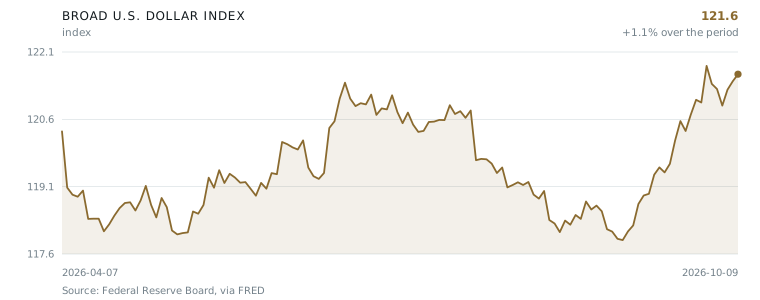
The broad US dollar index DTWEXBGS was 121.6023 on 9 October. That is a broad measure of the currency, not just a single bilateral price. Because it is broad, it points to a dollar move that is not confined to one cross. On 13 October, the US 10-year Treasury yield was 5.21%, or 42 basis points above the two-year yield. The curve is not simply inverted or steepened; it is telling investors that the front end is tight while the long end still demands compensation.
The ECB’s rate hikes are real, but they are being compared.
For a currency, the front end matters most. When the two-year yield sits well above the current policy rate, the market is pricing the possibility that the Federal Reserve has more to do, or at least that investors need to be paid for that risk. In that setting, a central bank that has already hiked can still lose ground to the dollar if the US rate path is expected to stay higher for longer. The ECB’s rate hikes are real, but they are being compared.
A credibility question, or a relative-price trade
There is a genuine dispute in how to read the phrase “despite”. One reading is that the ECB has implemented rate hikes and the euro has still made fresh lows, which raises a credibility question: if tighter policy is not supporting the currency, perhaps investors doubt the bank’s terminal rate, its growth outlook, or its ability to keep conditions tight enough.
The other reading is more mechanical. Exchange rates are relative prices. If the US side of the rate differential moves faster than the euro side, the euro can fall even when the ECB is doing what it said it would do. The broad dollar index at 121.6023 fits this view. The euro’s weakness against the pound keeps the question open.
For allocators, the channel runs through more than spot returns. A weaker euro raises the local-currency value of dollar assets for euro-based investors, but it also complicates hedging decisions because the cost of protection is tied to rate differentials. If the market begins to treat euro weakness as a policy credibility problem, European rates could face pressure to compensate holders of euro-area debt. That is the difference between a currency move and a funding condition.
What would settle it
The cleanest test is the behaviour of US front-end yields. If the euro steadies when the two-year Treasury stops climbing, the move looks like a relative-rate trade. If the euro keeps making fresh lows after the dollar rally loses momentum, the credibility reading becomes harder to dismiss.
The open question is whether the ECB can win the argument without help from the Federal Reserve.
- 01The euro fell to fresh lows against the US dollar and British pound.
- 02The ECB has implemented rate hikes.
- 03The broad US dollar index DTWEXBGS was 121.6023 on 9 October.
- 04The US two-year Treasury yield was 4.79% on 13 October.
- 05The US effective federal funds rate was 3.88% on 14 October.
Interpretation, not reporting. The facts above carry their tiers; this is one correspondent’s reading of them.
Credibility is not the rate move; it is the exchange-rate response. If the ECB hikes and the euro still slips against both the dollar and the pound, the market is either pricing a weaker euro-area growth path or doubting that the bank can finish the job. The cleaner explanation is relative policy: a two-year US yield at 4.79% against an effective federal funds rate of 3.88% says the Fed is expected to stay ahead, and the broad dollar at 121.6023 confirms the greenback is being bought for carry. I would not call this an ECB failure yet. The test is whether euro weakness persists when US front-end yields stop climbing or when euro-area data force repricing. If the euro remains soft after the rate differential stabilises, the credibility argument gains force. If it steadies as the dollar rally exhausts, this was a differential trade all along.
— Odile Marchetti
Every claim in this article, and what it rests on
We do not ask you to take our word for it. Each statement below carries its tier and its sources. Where sources disagree, you get both accounts and what would settle it.
The euro slid to fresh lows against the US dollar.
The euro slid to fresh lows against the British pound.
The ECB had implemented rate hikes.
The broad US dollar index DTWEXBGS was 121.6023 on 2026-10-09.
The US 2-year Treasury yield was 4.79% on 2026-10-13.
The US 10-year Treasury yield was 5.21% on 2026-10-13.
The US effective federal funds rate was 3.88% on 2026-10-14.
The euro's fresh lows occurred despite the ECB rate hikes.
The case against this story
Written by an adversarial reviewer, not the correspondent
The story frames euro weakness as paradoxical by saying the euro's fresh lows occurred 'despite' ECB rate hikes. But the data in the story itself undercuts this framing. The 2-year Treasury yield at 4.79% is roughly 91 basis points above the effective federal funds rate of 3.88%, signaling the market expects significant Fed rate hikes. Euro weakness against the dollar is the logical consequence of this expected widening rate differential, not a failure of ECB policy. The story also notes the euro fell against the British pound, which could reflect euro-specific factors or BoE policy expectations, but the narrative never explores this. By framing the euro's decline as occurring 'despite' ECB action, the story implies ECB rate hikes are ineffective, when the more likely explanation is that relative monetary policy expectations are driving the currency.
Who benefits from this framing: Investors short the euro or long the dollar benefit from framing euro weakness as an ECB policy failure rather than a rational response to expected Fed tightening. The narrative also serves those arguing for more aggressive ECB rate hikes, as it implies current ECB action is insufficient. Additionally, parties concerned about US fiscal sustainability benefit from highlighting elevated Treasury yields without context, as it could pressure policymakers toward austerity.
Report an error in this article
Subscriptions open at launch
Global Wealth Review will be a paid publication. Reading is free while we build the archive — leave an address and we will write to you once, when subscriptions open.