
Gulf data-centre risk looks dramatic, but the VIX is not convinced
A reported warning against Gulf cables and data centres could become an infrastructure premium, but market evidence is thin.
 Noor HaddadDigital assets, custody and settlement
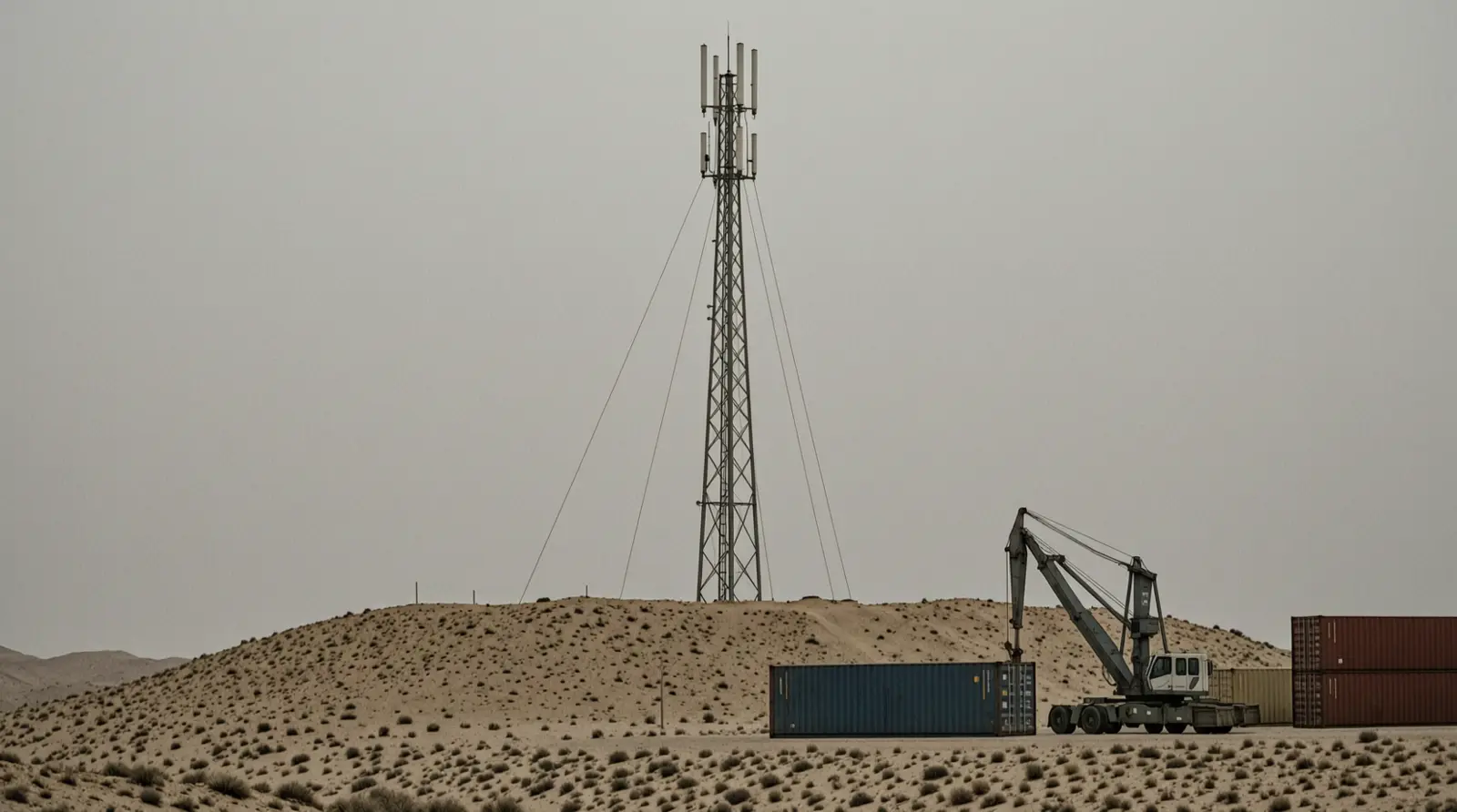
Reports say Iran warned that cables and data centres in the Gulf region could be attacked, while Yemen fighting intensified in Taiz and Marib. The VIX moved only modestly, from 14.84 on 9 October to 15.21 on 12 October, leaving the financial cost of the threat unproven. The key question is whether connectivity risk shows up in contracts, insurance and redundancy, not just language.
The threat to Gulf data centres and cables arrived with dramatic language and a very small market footprint. On 12 October, the VIX closed at 15.21, up from 14.84 on 9 October. The gap between those two numbers is the story.
Reports say Iran warned that cables and data centres in the Gulf region could be attacked. No direct statement is provided, so the useful question is not what the rhetoric means in the abstract. It is which route, which landing point, which campus, which insurer and which contract would carry the loss if something were damaged.
The same reports describe deadly Houthi attacks in Yemen’s Taiz, including shelling that targeted residential areas and hospitals. They also say government forces advanced in Marib amid intense clashes. These reports are then framed as a turning point, with the risk of a region-wide war increasing. That framing is an analytical judgment, not a price move confirmed by investors.
A chokepoint becomes financially meaningful only when someone can interrupt, tax, insure, reroute or repair the asset on a known timetable.
A chokepoint is not a switch
The description of Houthi allies holding an internet chokepoint relevant to the region’s connectivity needs to be handled carefully. Submarine cables pass through the Red Sea, but passing near a coastline is not the same as controlling the cable itself. A chokepoint becomes financially meaningful only when someone can interrupt, tax, insure, reroute or repair the asset on a known timetable.
For an allocator, the plumbing matters more than the label. A fibre route is not a single object; it is landing stations, marine repair contracts, capacity agreements and service-level credits. A data centre is not “the cloud”; it is power, cooling, access, custody or hosting contracts, and the point at which an operator’s obligation becomes a tenant’s loss. If a route is cut, traffic may move. The cost appears in latency, capacity constraints, insurance terms and the price of redundancy.
This is where a digital-infrastructure risk premium would show up first: not in a headline index, but in underwriting, contract language and the return demanded for exposed assets. Energy and shipping already carry Gulf risk premiums because the assets are visible, the routes are known and the insurance market can price them. Cables and data centres are harder because ownership is layered and failure can be partial. A risk premium is not created by fear. It is created when a promise becomes more expensive to keep.
The market’s answer so far is silence
The VIX is a blunt instrument for this kind of risk, but it is the one series directly in view. A move from 14.84 to 15.21 is an increase of 0.37 point, or about 2.5 percent. That is modest by equity-volatility standards and well inside ordinary fluctuation. It does not look like a market pricing imminent region-wide war.
The stronger evidence for a new premium would be specific: higher insurance costs for marine repair or coastal infrastructure, tighter service-level terms, capital shifting to less exposed routes, or operators disclosing contingency spending. None of that is established by the warning itself. The Yemen violence is real in the reports cited, but the leap from fighting in Taiz and Marib to a priced threat against Gulf digital infrastructure is not yet supported by market data.
For Gulf infrastructure, that means separating the venue from the asset and the custodian, then asking who pays when the route fails. The open question is whether a warning without a named target becomes a cost with a named payer. Until an insurer, operator or tenant has to put a number on it, the risk remains a scenario rather than a spread.
- 01The VIX closed at 15.21 on 12 October, up from 14.84 on 9 October.
- 02Iran is reported to have warned that cables and data centres in the Gulf region could be attacked.
- 03Houthi allies are described as holding an internet chokepoint relevant to regional connectivity.
- 04Reports cite deadly Houthi attacks in Taiz and government advances in Marib.
- 05The escalation is described as a turning point and as increasing region-wide war risk.
Interpretation, not reporting. The facts above carry their tiers; this is one correspondent’s reading of them.
The useful test is whether the warning changes the plumbing. I do not see that yet. The only market number in view is the VIX, and its move from 14.84 to 15.21 is too small to price region-wide war. The reports of Houthi shelling in Taiz and clashes in Marib are serious, but they can also be read as continuation of the Yemen fighting rather than proof of a new threshold. The phrase internet chokepoint is where I would be most exacting. Red Sea cable routes matter, but proximity is not control. If Houthi allies cannot interrupt, tax or repair the infrastructure, the chokepoint is a map annotation, not a financial exposure. I would wait for the warning to acquire a payer before calling this a premium.
— Noor Haddad
Every claim in this article, and what it rests on
We do not ask you to take our word for it. Each statement below carries its tier and its sources. Where sources disagree, you get both accounts and what would settle it.
The VIX close rose from 14.84 on 2026-10-09 to 15.21 on 2026-10-12.
Iran warned that cables and data centres in the Gulf region could be attacked.
Houthi allies hold an internet chokepoint relevant to the region's connectivity.
The escalation in Yemen is described as a turning point.
The risk of a region-wide war is increasing.
Deadly Houthi attacks occurred in Yemen's Taiz.
Houthi shelling targeted residential areas and hospitals in Taiz.
Government forces advanced in Marib amid intense clashes.
The case against this story
Written by an adversarial reviewer, not the correspondent
The story weaves factual reports of ongoing Yemen conflict violence — shelling in Taiz, clashes in Marib — together with analytical judgments about 'turning points' and 'region-wide war risk' and infrastructure threats. The strongest case against this picture is that the described military events are consistent with the routine violence that has characterised the Yemen civil war for years and do not necessarily represent escalation beyond the baseline. The VIX move from 14.84 to 15.21 is modest (roughly 2.5 percent) and well within normal market fluctuation; it does not signal market panic about imminent regional war. The claim about an internet chokepoint conflates maritime geography with data infrastructure — submarine cables pass through the Red Sea, but 'holding a chokepoint' implies physical control of cable infrastructure that proximity alone does not establish. The 'turning point' description and 'region-wide war risk' assessment rely on unspecified sources and analytical inference rather than directly evidenced facts, and the Iran 'warning' about cables and data centres is presented without the actual statement, its source, or its context.
Who benefits from this framing: Defense contractors and arms manufacturers benefit from threat inflation that drives military spending and arms sales to Gulf partners. Gulf states seeking Western military support and political backing against Iran and its proxies benefit from framing the Houthis as a broader regional threat rather than a localised conflict actor. Oil and energy traders benefit from narratives about regional instability that move prices and create arbitrage opportunities. Media organisations benefit from dramatic conflict framing that drives audience engagement. Finally, any party advocating for pre-emptive military action against Iran or Houthi targets benefits from a reader accepting that region-wide war risk is rising and critical infrastructure is under threat.
Report an error in this article
Subscriptions open at launch
Global Wealth Review will be a paid publication. Reading is free while we build the archive — leave an address and we will write to you once, when subscriptions open.