
Israel’s lawsuit, settler violence and Colombia’s turn test risk
Domestic legal conflict, West Bank violence and a reported Colombia-Israel realignment could alter Israeli risk premia and regional investment relationships.
 Odile MarchettiCentral banks, rates and sovereign debt
Reports of a defamation suit tied to the October 7 attack, renewed Netanyahu warnings and West Bank violence add political and security friction to Israeli risk. The most consequential items are the Colombia reports: an embassy in West Jerusalem, restored free trade and Abelardo de la Espriella as president, all unconfirmed. The market issue is whether these signals become official policy or remain election-season noise.
The October 7 attack has become an election-season legal question, after reports that Israel’s former security chief sued Prime Minister Benjamin Netanyahu for defamation over the attack. The suit is described without a named plaintiff, a court or a filing date, which makes it hard to price but easy to use. In Israeli politics, the difference between a real docket and a campaign accusation matters.
A lawsuit with no courtroom yet
The reported defamation case arrives while Netanyahu is reported to have warned again that Israel’s enemies are planning an attack before elections. Those two signals work through the same channel: security credibility. A lawsuit tied to October 7 puts responsibility for the attack back in public debate. A warning about a new attack shifts attention outward. One is retrospective, the other anticipatory. Together they raise the chance that security policy becomes an electoral weapon rather than a stable operating framework.
For markets, the mechanism is indirect. Political instability does not automatically raise borrowing costs, but it can widen the discount applied to policy continuity. If ministries, procurement and coalition commitments become contested, the sovereign story becomes harder to underwrite. The missing details matter. A court filing would create a legal timeline; a campaign allegation does not. That is why the absence of a named venue is not a detail; it is the difference between a legal event and a political one.
The market question is not whether one headline moves a bond, but whether the cluster survives contact with institutions.
Colombia’s sudden turn needs proof
The Colombia items are the hardest part of the package. Colombia is reported to have opened an embassy in West Jerusalem, restored free trade with Israel and installed Abelardo de la Espriella as president. If true, that would be a sharp reversal from Bogotá’s recent posture toward Israel. But the sequence is not yet corroborated by the kind of evidence that moves trade routes or diplomatic postings.
Embassies and free-trade agreements are not slogans. They require ministries, customs schedules, diplomatic notes and budget lines. A reported embassy opening in West Jerusalem would also touch one of the most contested questions in Middle East diplomacy. Until the reporting is matched by official acts, the Colombia cluster remains fragile. The market question is not whether one headline moves a bond, but whether the cluster survives contact with institutions. A trade restoration can alter tariffs and corporate planning. An embassy can alter consular and political channels. A disputed presidency can undo both.
West Bank violence raises the diplomatic cost
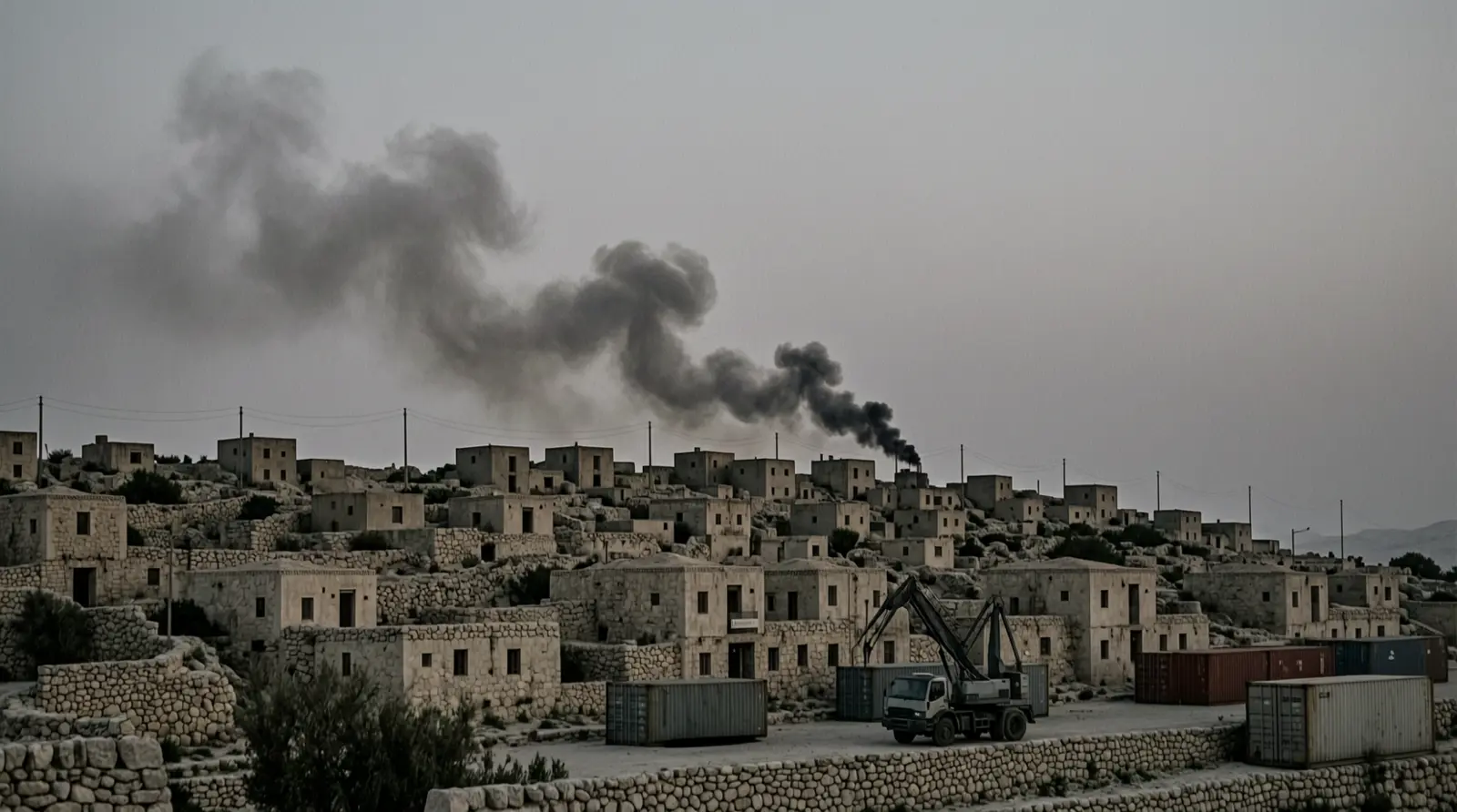
The other reports are more familiar and therefore more dangerous. Settlers are reported to have set fire to a mosque in the West Bank, while Israeli forces raided villages in the territory. The UN is reported to have demanded that Israel do more to stop settler violence. Each item alone may not shift capital. Together they raise the diplomatic cost of holding Israeli exposure during an election season.
The UN demand does not create a sanction by itself. It changes the language available to governments, funds and companies when explaining distance from Israel. Raids and arson change the security picture on the ground. That can affect insurance, logistics and project timing long before it appears in a sovereign spread.
The open question is whether these reports converge into durable policy risk or remain a burst of election-season noise. The Colombia items need official confirmation. The lawsuit needs a court. The West Bank violence needs a trend line. Until one of those appears, the risk is that the market prices the headlines but not the mechanism.
- 01Reports say Israel’s former security chief sued Netanyahu for defamation over the October 7 attack.
- 02Netanyahu is reported to have warned of an attack before elections.
- 03Colombia is reported to have opened an embassy in West Jerusalem and restored free trade.
- 04Abelardo de la Espriella is reported as Colombia’s new president, but the sequence lacks official confirmation.
- 05Reported settler arson, raids and a UN demand raise West Bank diplomatic pressure.
Interpretation, not reporting. The facts above carry their tiers; this is one correspondent’s reading of them.
The Colombia cluster is the part of this story that needs the most corroboration and carries the most market meaning. I would separate the tradable from the theatrical. A reported embassy opening and free-trade restoration would matter if they survive contact with Colombia’s institutions, because embassies and trade schedules are balance-sheet events, not slogans. But the reported presidency of Abelardo de la Espriella is unconfirmed, and that weakness drags on the whole sequence. The lawsuit and settler violence are easier to place: they raise political and security friction without by themselves breaking Israel’s external relationships. What would change my view is simple: official confirmation of the embassy and trade measures, or a court filing naming the plaintiff and venue in the defamation suit. Until then, the signal is thin, and the better inference is that election-season noise is rising faster than durable diplomatic realignment.
— Odile Marchetti
Every claim in this article, and what it rests on
We do not ask you to take our word for it. Each statement below carries its tier and its sources. Where sources disagree, you get both accounts and what would settle it.
Colombia opened an embassy in West Jerusalem.
Colombia restored free trade with Israel.
Abelardo de la Espriella is Colombia's new president.
Settlers set fire to a mosque in the West Bank.
Israeli forces raided villages in the West Bank.
The UN demanded that Israel do more to stop settler violence.
Netanyahu warned again that Israel's enemies were planning an attack before elections.
Israel's former security chief sued Netanyahu for defamation over the October 7 attack.
The case against this story
Written by an adversarial reviewer, not the correspondent
The strongest case against this story is that the three Colombia claims form an internally contradictory cluster that appears fabricated or confused. Colombia under President Petro was one of Israel's loudest critics, severing military ties and recalling diplomatic staff. The claim that Abelardo de la Espriella is Colombia's new president is extraordinary and unsupported — he is a lawyer and political outsider with no electoral mandate. Without evidence of a leadership change, the claims about an embassy in West Jerusalem and restored free trade appear invented or confused with another country's actions. If the Colombia claims collapse, the story's picture of diplomatic momentum for Israel loses its central pillar. The claim about a former security chief suing Netanyahu for defamation is similarly unmoored — no plaintiff is named, no court is identified. The remaining West Bank and UN claims, while individually plausible, are common enough to be true on any given day; their inclusion alongside the dubious Colombia and lawsuit claims suggests they serve as filler to create a coherent-seeming narrative around an unsupported core.
Who benefits from this framing: Netanyahu and the Israeli right wing benefit from this framing. The Colombia claims create a false impression of growing international support for Israel's most controversial positions — an embassy in Jerusalem and expanded trade — which is exactly the diplomatic validation Netanyahu seeks. The settler-violence and UN-pressure claims, while potentially true, are framed alongside the Colombia claims to create a narrative where Israel is simultaneously gaining allies and facing unfair international criticism, a classic Netanyahu talking point. The lawsuit claim and Netanyahu's attack-warnings reinforce his preferred narrative of being under siege from enemies external and internal, justifying his security posture and election-season alarmism. A reader who believes this framing comes away thinking Israel's diplomatic position is strengthening even as it faces threats — a picture that serves Netanyahu's political interests directly.
Report an error in this article
Subscriptions open at launch
Global Wealth Review will be a paid publication. Reading is free while we build the archive — leave an address and we will write to you once, when subscriptions open.