
Milei's university fight spills into streets and courts
A university-funding dispute is moving from budget politics to legal compliance, with the blue-dollar screen keeping currency stress in view.
 Odile MarchettiCentral banks, rates and sovereign debt
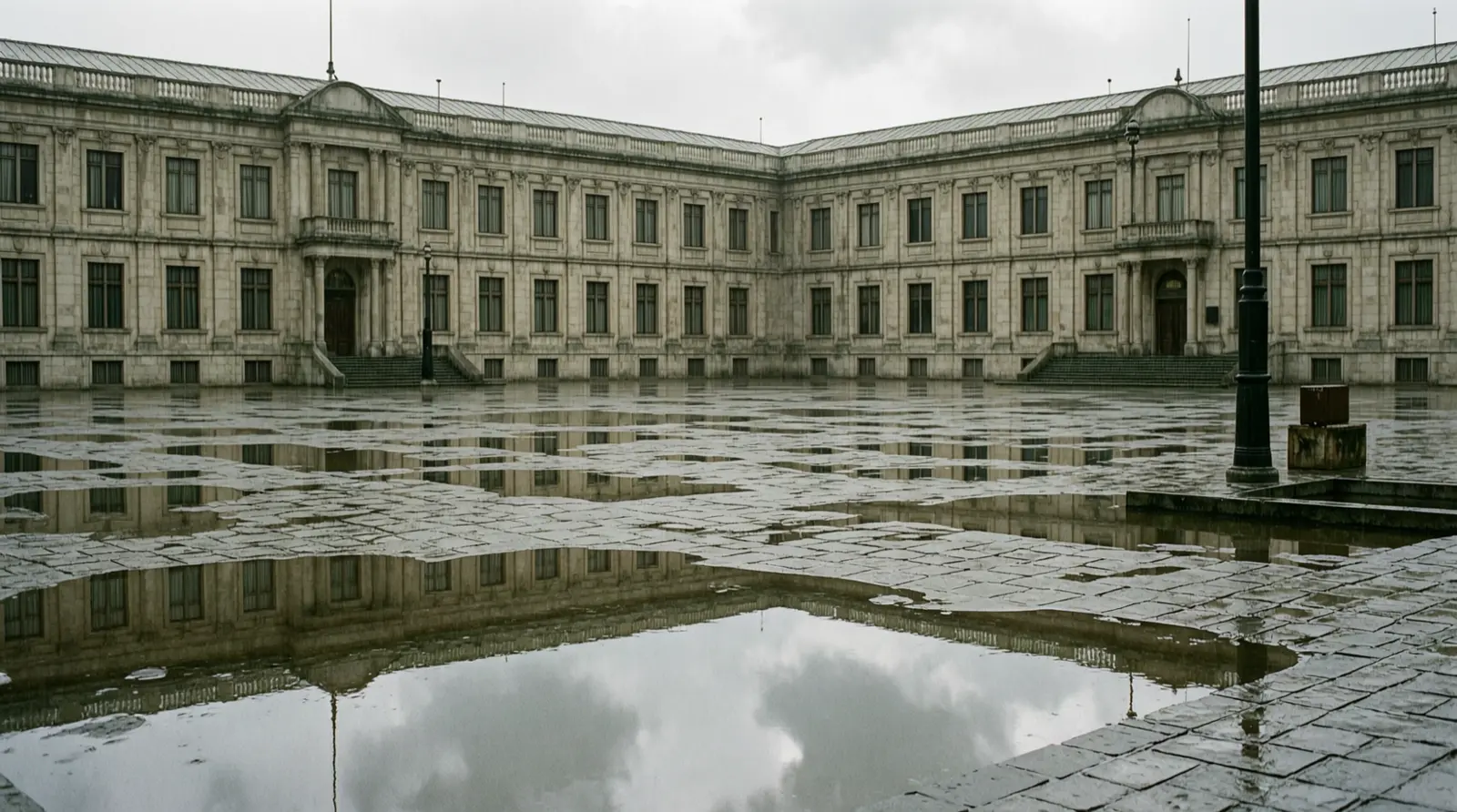
Reports show campus protests, a Buenos Aires demonstration over a university-funding law and a judicial fine tied to university funding. The available accounts may describe one protest and one court action rather than a broad national rupture. The daily official and blue-dollar rate reports keep the currency backdrop visible without proving new stress.
On 16 October, two exchange rates were being reported in Argentina — the official one and the blue dollar — while a university-funding dispute moved through campuses, the streets and a courtroom. The daily rate comparison is routine. The protest accounts are not routine, but they are narrower than the crisis framing around them.
A funding law meets a court order
Students were reported to have protested on campus over Milei's austerity program. In Buenos Aires, demonstrators were described as demanding that the government implement a law to boost university funding. That shifts the argument from a political preference to a compliance question: whether a law is being implemented by the government.
A judge was reported to have fined the government for failing to fund universities. If that account is accurate, the dispute is no longer only about spending priorities. It becomes a question of whether the state is meeting a legal obligation. The more careful reading is not that Argentina has entered a general institutional crisis, but that a budget fight has acquired a judicial marker.
The danger in stitching these pieces together is that a single protest, one court action and a routine currency quotation can begin to look like a composite emergency. The available picture does not show that university unrest has spread across the country, that the fine has changed the budget, or that the exchange-rate gap has widened. It shows that a funding dispute has become visible in three places at once: the campus, the street and the legal record.
The exchange-rate screen does not cause that chain, but it gives investors a daily scoreboard for how much distrust is embedded in the currency system.
The street may be one protest, not a wave
Reports also described clashes at a protest over the university-funding law and said the demonstrations turned violent. Those characterizations are not independently corroborated here, and they may be describing a single event from several angles. Routine friction at a demonstration can become clashes in one account and violence in another.
That matters because the market implication depends on scale. A campus protest is a political irritant. A sustained wave of street resistance would be a different fiscal and governance problem. The available descriptions sit somewhere in between: enough to show that austerity is encountering resistance, not enough to prove that resistance has become systemic.
The blue-dollar screen is a habit, not a verdict
The exchange-rate line is easy to misread. Argentina's official and blue-dollar rates were being reported, and the practice can look like stress even when it is only routine. It does, however, keep a familiar pressure point in view: the gap between the official price of dollars and the blue-dollar price.
For wealth allocators, the mechanism is straightforward. University funding is a fiscal line. A court order can turn that line into a legal claim. Street protests can turn a legal claim into political risk. The exchange-rate screen does not cause that chain, but it gives investors a daily scoreboard for how much distrust is embedded in the currency system.
The next signal is not another description of clashes. It is whether the funding law appears in actual payments, whether the court order is appealed or obeyed, and whether the blue-dollar watch becomes a story about the budget, the courts or the currency. Those are separate channels. They can reinforce one another, but they are not the same thing.
The open question is whether the court ruling becomes enforceable money, or remains a symbolic rebuke. If the government pays, the austerity program bends. If it does not, the next test may move from a courtroom to the budget itself.
- 01Students were reported to have protested over Milei's austerity.
- 02Demonstrators in Buenos Aires demanded implementation of a university-funding law.
- 03A judge was reported to have fined the government over university funding.
- 04Reports of clashes and violence were not independently corroborated.
- 05Official and blue-dollar exchange rates were being reported.
Interpretation, not reporting. The facts above carry their tiers; this is one correspondent’s reading of them.
The fiscal fight is becoming a legal test before it becomes a market test. I would not treat the reported protests, the reported fine and the routine currency quotations as evidence of a broad institutional break. They are better read as one budget line becoming harder to enforce quietly. If the court order translates into actual payments, Milei's austerity bends without a dramatic capitulation. If it is ignored or contested, the dispute moves from symbolism to compliance. What would change my view is scale: multiple campuses protesting over time, a court order that forces a measurable budget change, or exchange-rate reporting that coincides with a widening gap rather than a daily habit. Without those, the story is friction, not rupture. The interesting point is not that Argentina has a protest, but that a funding law is being argued in three arenas at once.
— Odile Marchetti
Every claim in this article, and what it rests on
We do not ask you to take our word for it. Each statement below carries its tier and its sources. Where sources disagree, you get both accounts and what would settle it.
Argentine students protested on campus over Milei’s austerity.
A judge fined the Argentine government for failing to fund universities.
Protests over Milei’s university-funding cuts turned violent.
Clashes erupted at a protest in Argentina over a university-funding law.
Protesters in Buenos Aires demanded that the government implement a law to boost university funding.
Argentine official and blue-dollar exchange rates were being reported.
The case against this story
Written by an adversarial reviewer, not the correspondent
The overall picture stitched together by these claims — mass campus unrest, judicial rebuke, violent clashes, and economic instability signaled by exchange-rate reporting — may be significantly inflated. Four of the six claims describe what could be a single protest event from slightly different angles, making the situation appear larger and more widespread than it may be. The 'violence' and 'clashes' characterizations are not independently corroborated and may describe routine protest tension. The judicial 'fine' may be a looser order mischaracterized. And the exchange-rate claim is near-tautological — official and blue-dollar rates are reported every day in Argentina as a matter of course, so including it alongside crisis framing implies economic deterioration that the claim itself does not establish. A reader could easily walk away believing Argentina faces a multi-front institutional crisis when the evidence may support only that one university-funding protest occurred and a court made a ruling of some kind.
Who benefits from this framing: Political opponents of Milei's government benefit from a framing that emphasizes unrest, institutional pushback, and economic anxiety surrounding his austerity agenda. University faculty unions and student organizations advocating for increased funding benefit from any narrative depicting government policy as legally and socially untenable. Opposition parties benefit from the impression that Milei's reforms are collapsing under popular and judicial pressure. Additionally, media outlets covering Argentine crisis benefit from heightened drama that drives engagement.
Report an error in this article
Subscriptions open at launch
Global Wealth Review will be a paid publication. Reading is free while we build the archive — leave an address and we will write to you once, when subscriptions open.