
Riyadh drone strike and tanker fires leave Gulf risk unresolved
Two security incidents and stalled talks raise questions about Gulf energy flows, but attribution and cause are not established.
 Odile MarchettiCentral banks, rates and sovereign debt
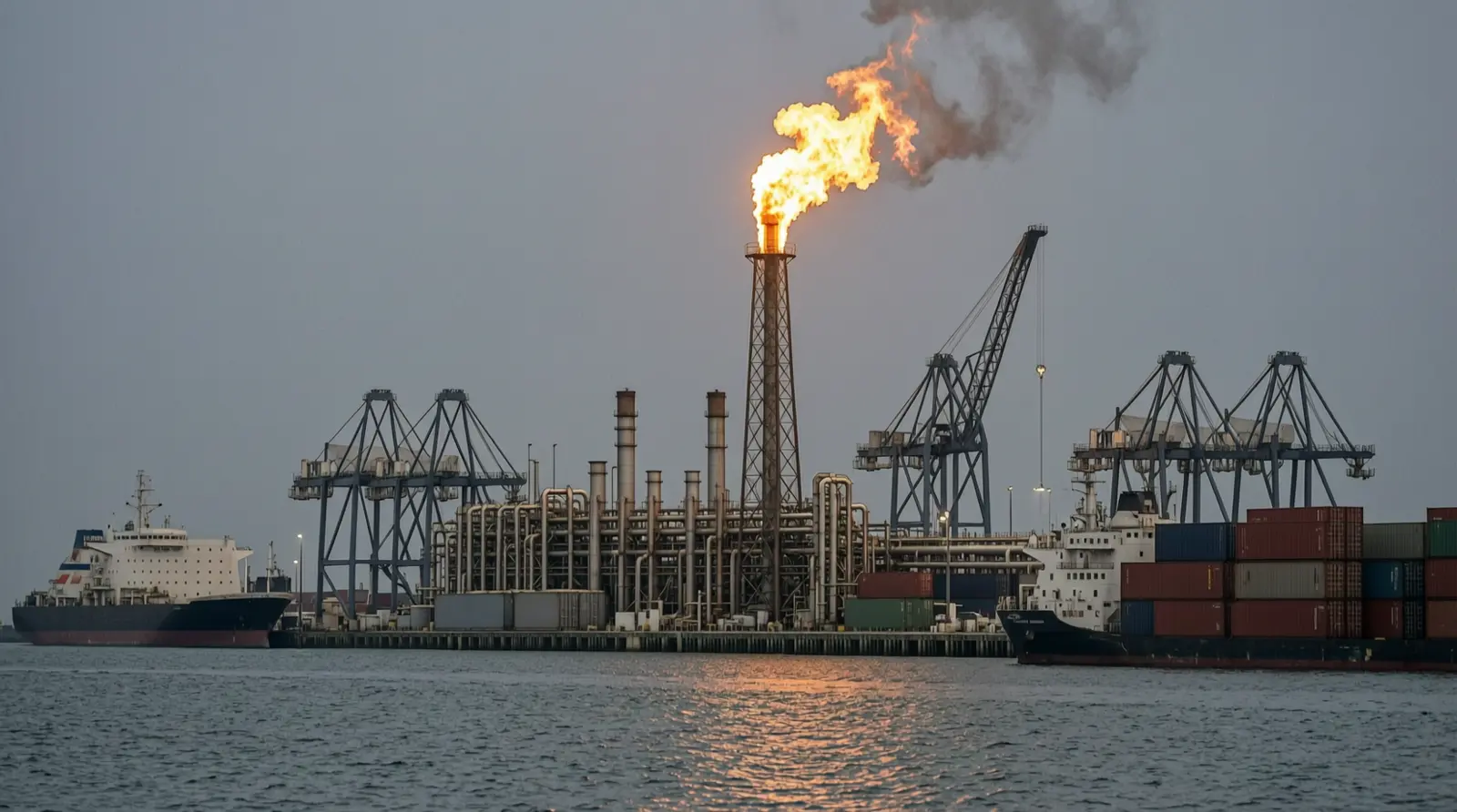
Riyadh was targeted by drones on 18 October 2026, and fires were reported on three tankers. Iran-US negotiations keep failing, while Iran has appointed a defence minister whose experience centres on ballistic missiles and aerospace technology. The incidents are not linked by an identified actor or cause, so the immediate question is how much weight to give unexplained events.
On 18 October 2026, drones reached Riyadh. The city is the administrative centre of Saudi Arabia’s oil policy, and an attack there touches the state’s ability to protect critical infrastructure. The drone attack is not attributed. That absence is the first fact in the file.
A drone strike on a capital does not automatically mean a state actor. It can mean a non-state group, a failed interception, or an attack whose launch point is still contested. The market channel is therefore not simple physical damage. It is the reassessment of how defensible Saudi assets are, and how much uncertainty should be carried until an attribution is made.
The absence of damage figures matters as much as the attack itself. A drone that strikes a ministry building, a palace, an oil facility, or an empty perimeter creates a different risk profile. The first two are political; the third is supply; the fourth is a warning. Until the target is known, the incident can be priced only as uncertainty.
Tanker fires without a map
Fires were reported on three tankers. No location, date or cause is provided. That matters because a tanker fire in port, in a coastal anchorage, in a narrow chokepoint, or on the open sea carries a different set of consequences. One setting implies local safety failure. Another implies navigation risk. Another implies hostile action against cargo.
The honest answer is that the events, as described, do not yet form a single chain.
For shipping, the mechanism runs through insurance and routing. If underwriters cannot distinguish accident from attack, they price the ambiguity. If charterers cannot tell whether three incidents are related, they may add time, distance or demurrage to cargoes. Those are slow-moving costs, but they compound.
The same ambiguity applies to sovereign balance sheets. Saudi Arabia’s credibility rests on its ability to protect production and export routes. If attacks or fires remain unexplained, the state must spend more on defence, inspection and redundancy. Those costs are not immediate, but they are compounding.
The Riyadh attack and the tanker fires may ultimately be connected. They may also be separate. The honest answer is that the events, as described, do not yet form a single chain.
A minister, a negotiation and an unrelated attack
Iran-US negotiations keep failing. That is a political fact with a direct market meaning: the diplomatic channel that could lower the probability of confrontation is not producing a result. But a stalled negotiation is not the same as a decision to escalate. It can reflect narrow technical gaps, domestic constraints, or a deliberate choice to keep options open.
The phrase “keep failing” is also important. It suggests a pattern, not a single collapsed round. But a pattern of failure can coexist with partial technical discussions, back-channel messages, or pauses driven by domestic calendars. Repeated failure does not convert automatically into a binary expectation of conflict.
Mehrdad Akhlaghi is Iran’s new tech-focused defence minister. His experience centres on ballistic missiles, aerospace technology and defence-industrial production. A minister’s résumé can show where institutional attention will sit. It does not show that orders have changed, that deployment thresholds have moved, or that the incidents in Riyadh and on the tankers were directed by Tehran.
A separate event adds political noise: masked Israeli settlers attacked European politicians in the occupied West Bank. That attack is not tied to the drones, the tankers, or the Iran-US talks. Its relevance is that it widens the region’s diplomatic friction at the same time as Gulf energy infrastructure is under scrutiny.
The open question is attribution. A confirmed cause for the tanker fires would move the story from ambiguity to a specific risk. A named actor for the Riyadh drones would do the same. Until then, the incidents sit side by side, not yet stacked into a single escalation.
- 01Riyadh was targeted by drones on 18 October 2026.
- 02Fires were reported on three tankers.
- 03Iran-US negotiations keep failing.
- 04Mehrdad Akhlaghi is Iran’s new tech-focused defence minister.
- 05Masked Israeli settlers attacked European politicians in the occupied West Bank.
Interpretation, not reporting. The facts above carry their tiers; this is one correspondent’s reading of them.
Ambiguity, not confirmed escalation, is the market signal. I would treat the Riyadh drone attack and the tanker fires as separate facts until a cause, location or actor is established. The appointment of Mehrdad Akhlaghi tells us where Iran’s defence-industrial attention may sit, not what it has decided to do. The repeated failure of Iran-US negotiations removes a cushion, but it does not itself prove an offensive turn. The settler attack in the West Bank belongs to a different thread entirely.
What would change my view is linkage. A credible attribution tying the tanker fires to the Riyadh drones would turn two ambiguous events into one security problem. A clear statement of responsibility would do the same. Until then, the prudent interpretation is that the region has several unresolved incidents at once, not a single coordinated campaign. That distinction matters because it changes whether the risk is episodic or structural.
— Odile Marchetti
Every claim in this article, and what it rests on
We do not ask you to take our word for it. Each statement below carries its tier and its sources. Where sources disagree, you get both accounts and what would settle it.
Riyadh was targeted by drones on 18 October 2026.
Fires were reported on three tankers.
Masked Israeli settlers attacked European politicians in the occupied West Bank.
Iran-US negotiations keep failing.
Mehrdad Akhlaghi is Iran’s new tech-focused defence minister.
Mehrdad Akhlaghi’s experience centres on ballistic missiles, aerospace technology and defence-industrial production.
The case against this story
Written by an adversarial reviewer, not the correspondent
The story constructs a narrative of Iranian-led regional escalation by placing side by side: a new Iranian defence minister labelled 'tech-focused' with ballistic missile experience, failed Iran-US talks, a drone attack on Riyadh, and tanker fires. But none of these events are linked by any evidence in the claims themselves. The Riyadh drone attack is not attributed to Iran; Houthi forces in Yemen have launched drones at Saudi targets before and could be responsible. The tanker fires are described with no location, date, or cause — they could be mechanical accidents or the work of any actor in the Gulf, Red Sea, or elsewhere. 'Iran-US negotiations keep failing' is an editorial characterization that obscures whether specific rounds made partial progress or stalled on narrow issues. Calling the new defence minister 'tech-focused' and emphasizing ballistic missile experience frames a bureaucratic appointment as a signal of aggressive intent without showing any policy change. The settler attack on European politicians in the West Bank is entirely unrelated to the Iran-focused claims; its inclusion inflates the sense of regional chaos without adding to the Iran narrative. The overall picture implies a coordinated Iranian escalation campaign that the individual claims, examined separately, do not establish.
Who benefits from this framing: Readers who accept this framing are primed to see Iran as the driver of regional instability and diplomacy as a dead end. That benefits advocates of military confrontation with Iran — hardline factions in the United States, Israel, and Gulf states who argue that engagement has failed and force is the only option. Saudi Arabia gains victim status to justify additional air-defence procurement and security guarantees. The Israeli government benefits from the settler-attack claim, which can be used to argue that European political involvement in the West Bank is provocative or that Israel faces disproportionate scrutiny. Defence contractors benefit from any framing that raises perceived threat levels. Opponents of any nuclear agreement with Iran benefit from the impression that Tehran is escalating while talks collapse.
Report an error in this article
Subscriptions open at launch
Global Wealth Review will be a paid publication. Reading is free while we build the archive — leave an address and we will write to you once, when subscriptions open.