
Settler violence allegations pull Washington into West Bank test
Alleged attacks on diplomats and an American journalist raise sanctions risk and a wider Europe-Israel rupture.
 Odile MarchettiCentral banks, rates and sovereign debt
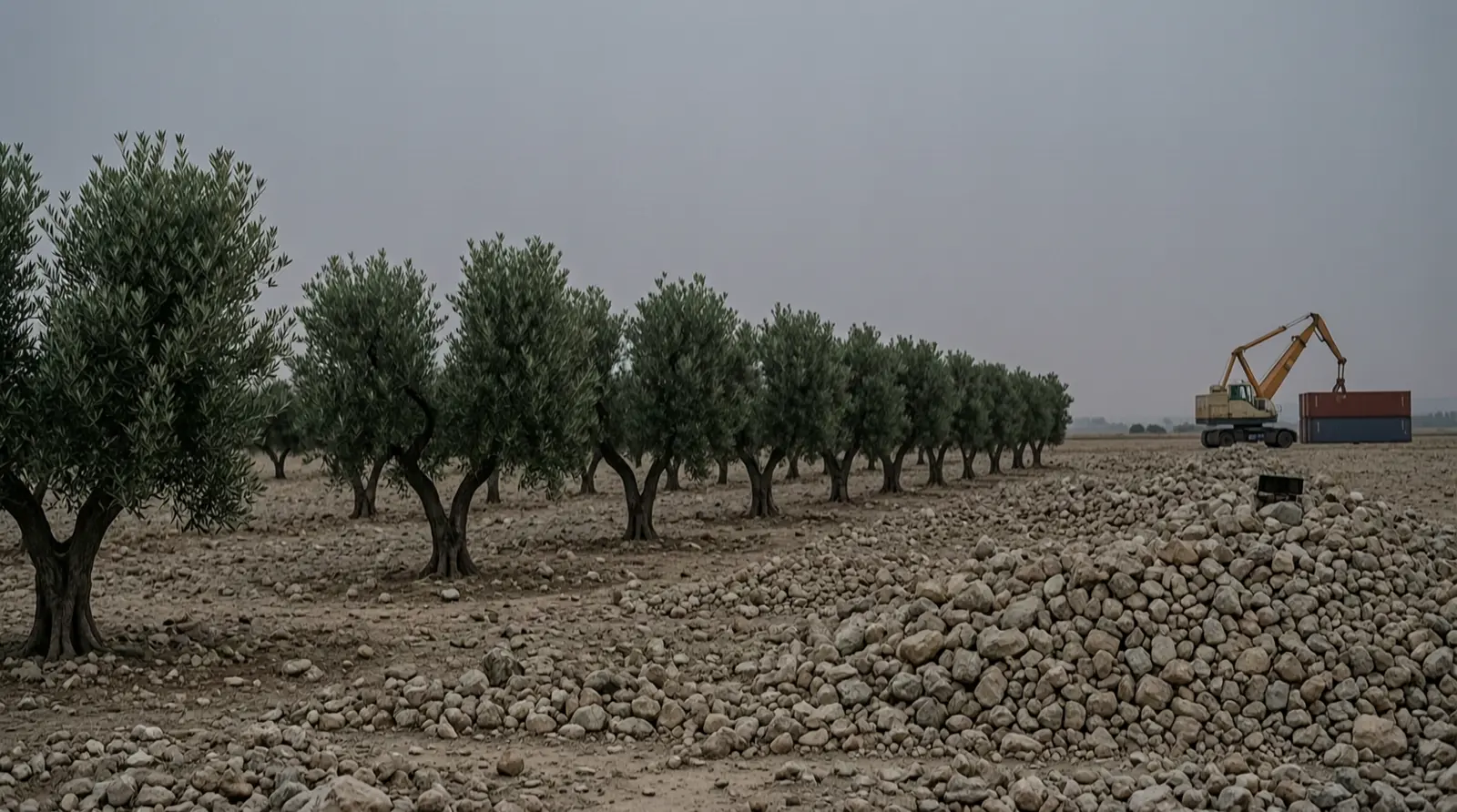
Accounts from the occupied West Bank describe masked Israeli settlers attacking European diplomats, beating and severely wounding Palestinian farmers, and attacking an American journalist. In the same sequence, US Secretary of State Rubio and the US ambassador urged Israel to crack down and prosecute the attackers of the journalist. France and Belgium condemned the attack on diplomats, raising the risk that the episode moves from outrage to formal measures.
Three episodes in the occupied West Bank have pulled Washington into a question it usually prefers to manage quietly: how far settler violence can travel before it becomes a formal diplomatic problem.
The account is specific: masked Israeli settlers attacked European diplomats. In a separate episode described in the same account, Israeli settlers beat and severely wounded Palestinian farmers. An American journalist was also attacked.
Those are not only local injuries. They touch three constituencies that can move policy: accredited officials, agricultural communities, and the US press. The diplomatic calendar can absorb one violent episode. It struggles when the victims include officials who carry accreditation, farmers whose land is central to rural livelihoods, and a journalist whose work creates an external record. Each category pulls a different lever: consular protection, humanitarian policy and press freedom.
Washington enters through the press
The American journalist is the pivot. After that attack, US Secretary of State Rubio urged Israel to crack down on settler violence. The US ambassador then urged Israel to prosecute the attackers.
That changes the mechanism. The issue is no longer confined to security coordination or local policing. It becomes a test of whether Israel will use its own courts and enforcement apparatus against settlers who harm Americans.
Without prosecution, the pressure remains political and therefore volatile.
A demand from the secretary of state is not a sanction. But it places the issue inside a bureaucracy that tracks incidents, asks for updates and can later attach conditions to assistance or access. The ambassador's call for prosecution is narrower and potentially more consequential, because prosecutions force choices about evidence, custody and sentencing.
For investors, the channel is simple. Prosecution creates a record. A record creates names. Names create exposure to sanctions, visa restrictions and procurement reviews. Without prosecution, the pressure remains political and therefore volatile.
Europe's diplomats raise the stakes
France and Belgium condemned the attack on diplomats. That matters because European governments do not usually treat assaults on their officials as a matter for public anger alone. Diplomatic status is meant to insulate the state from the street.
When that status is breached, the response tends to move through formal channels: demarches, recalls, conditionality in association agreements, and closer scrutiny of settlement-linked goods. The familiar European debate on settlement-linked activity has often centered on labeling and trade. This time, the presence of diplomats in the victim list gives ministries a direct institutional interest.
France and Belgium are not the whole of Europe, but their joint condemnation gives the episode a governmental character. It moves the issue from a consular complaint to a foreign-policy file. That file can sit dormant, or it can become the basis for coordinated measures if another incident adds urgency.
The comparison has limits. Trade measures require consensus, and consensus is slow. But the political cost of ignoring an attack on European officials is higher than the cost of ignoring attacks on farmers.
What would turn anger into measures
The open question is whether the condemnations become administrative action. A crackdown can mean arrests, indictments, travel bans or asset freezes. It can also mean a temporary increase in patrols and a quiet closing of files.
Markets tend to price the first version only after it appears in official documents. Until then, the risk sits in headlines and ministerial statements. For asset owners, the near-term risk is not a sudden repricing. It is the slow accretion of legal and reputational constraints around entities linked to settlement activity. That process starts with language, but it becomes material when banks, insurers and procurement offices are asked to explain their exposure.
The thing to watch is not the volume of outrage. It is whether the US ambassador's demand for prosecution is followed by named defendants, and whether France and Belgium move from condemnation to a coordinated European instrument.
- 01Masked Israeli settlers attacked European diplomats in the occupied West Bank.
- 02Israeli settlers beat and severely wounded Palestinian farmers.
- 03An American journalist was attacked.
- 04US Secretary of State Rubio urged Israel to crack down on settler violence.
- 05France and Belgium condemned the attack on diplomats.
Interpretation, not reporting. The facts above carry their tiers; this is one correspondent’s reading of them.
The real signal is not the violence itself but the status of the victims. Attacks on farmers are too often treated as a local tragedy; attacks on diplomats and an American journalist turn the same pattern into a state-to-state problem. I read Rubio's demand for a crackdown and the ambassador's call for prosecution as the beginning of a paper trail, not the end of one. France and Belgium's condemnation gives Europe a formal hook, and that is where sanction risk usually starts: with language that later has to be enforced. What would change my mind is simple. If the prosecution demand fades while the condemnations remain rhetorical, the rupture risk looks smaller. If the demand for prosecution is followed by action, the diplomatic cost of doing nothing rises quickly.
— Odile Marchetti
Every claim in this article, and what it rests on
We do not ask you to take our word for it. Each statement below carries its tier and its sources. Where sources disagree, you get both accounts and what would settle it.
Masked Israeli settlers attacked European diplomats in the occupied West Bank.
Israeli settlers beat and severely wounded Palestinian farmers.
An American journalist was attacked.
US Secretary of State Rubio urged Israel to crack down on settler violence after the attack on the American journalist.
The US ambassador urged Israel to prosecute the attackers of the American journalist.
France and Belgium condemned the settler attack on diplomats.
The case against this story
Written by an adversarial reviewer, not the correspondent
The entire story rests on zero supplied evidence. Every assertion — from masked settlers attacking European diplomats to Secretary Rubio demanding a crackdown — is presented without a single source, document, statement, or eyewitness account. The narrative is suspiciously complete: settlers attack three different categories of victims (diplomats, farmers, a journalist), and then the US Secretary of State, the US ambassador, and two European governments all respond in a coordinated chorus of condemnation. This cascade reads less like reported events and more like a constructed advocacy narrative. The language is loaded throughout — 'masked,' 'severely wounded,' 'crack down' — with no attribution to any observer, official, or document. Without a single cited source, the reader cannot distinguish between a story that is entirely accurate, partially distorted, or wholly fabricated.
Who benefits from this framing: If a reader accepts this framing, the primary beneficiaries are advocates and governments seeking to portray Israeli settlers as systematically violent and Israel as either unwilling or unable to control them. European governments gain diplomatic leverage by casting their own envoys as physical targets of settler aggression. Pro-Palestinian advocacy groups gain a powerful multi-victim narrative — diplomats, farmers, and a journalist — that dramatizes settler impunity. US officials gain domestic political capital for appearing to hold Israel accountable while preserving the broader alliance. The framing also benefits anyone who wants to internationalize the settler-violence issue by suggesting it now threatens American citizens and European officials, not just Palestinians.
Report an error in this article
Subscriptions open at launch
Global Wealth Review will be a paid publication. Reading is free while we build the archive — leave an address and we will write to you once, when subscriptions open.