
St Petersburg strike chatter tests Kyiv’s Washington channel
Unverified deep-strike footage and nonstop Kyiv-Washington diplomacy can still move energy, defence and sanctions exposure before markets price it.
 Odile MarchettiCentral banks, rates and sovereign debt
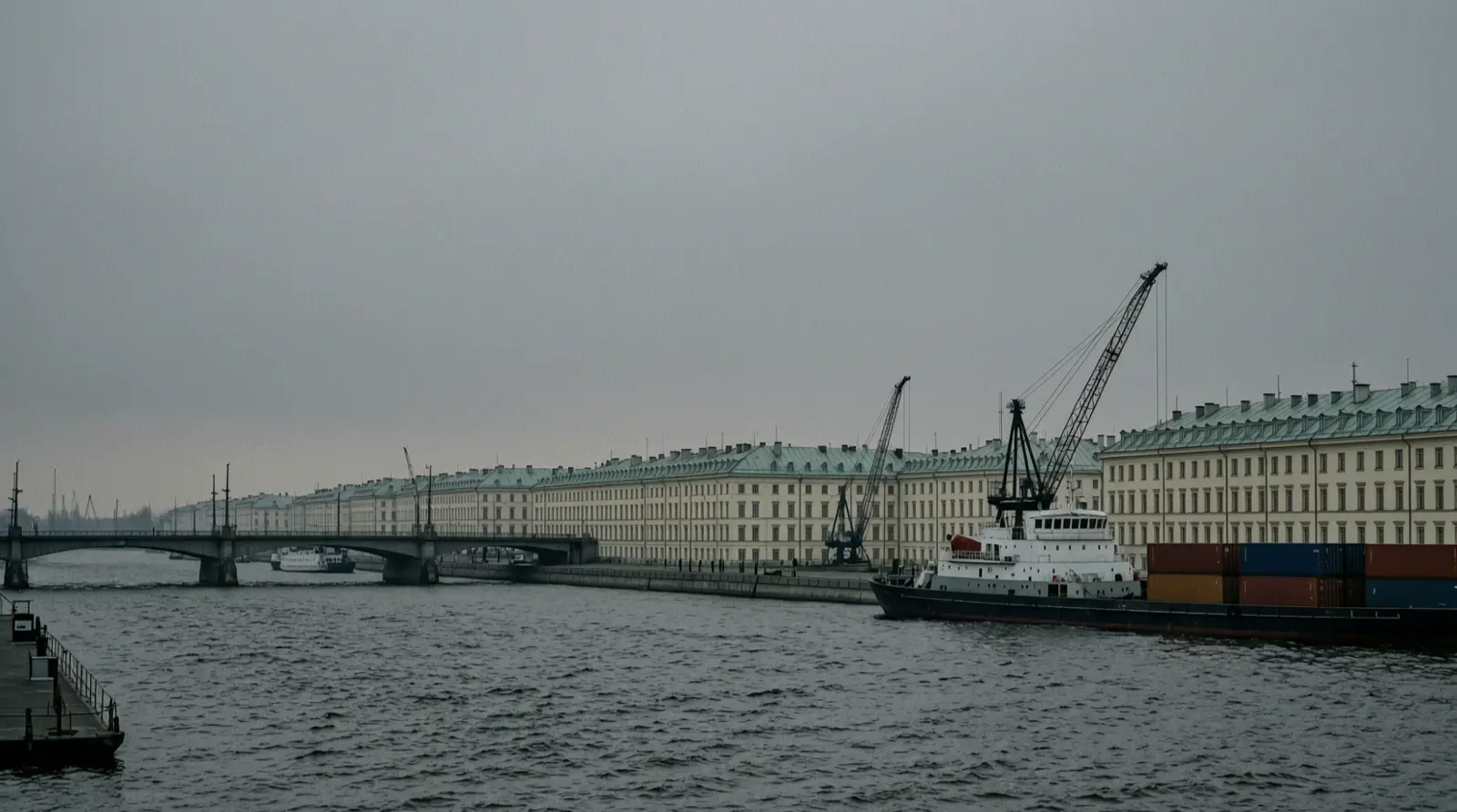
Social-media video showed explosions in St Petersburg after a suspected Ukrainian drone swarm, but attribution remains unconfirmed. Zelenskyy’s Washington channel is active, yet the VIX at 16.46 and a normally sloped Treasury curve show little urgency. The key question is whether either development turns into confirmed escalation or a material change in aid flows.
Explosions without a confirmed chain of custody
The VIX closed at 16.46 on 15 October, a calm reading. Social-media video showed multiple explosions in St Petersburg after what was described as a suspected Ukrainian drone swarm. That is the kind of footage that travels fast and settles slowly. No attribution has been confirmed in the public record, and the sequence rests on open-source clips rather than a verified official account.
For markets, the distinction matters. A confirmed deep strike inside Russia would raise the odds of retaliation against energy infrastructure, transport nodes and export routes, with a direct path to insurance premiums, freight rerouting and sanctions enforcement. A suspected strike that remains unverified can still move headlines, but it does not yet move the balance sheet of a refinery, a shipowner or a defence contractor in a durable way.
The diplomatic track is more solid, but not necessarily more dramatic. Zelenskyy said Russia’s war on Ukraine must be brought to an end. He also said communication between Washington and Kyiv is virtually nonstop. Those are useful signals that the channel is open. They are not, by themselves, evidence of a breakthrough or a rupture.
That is not the shape of investors rushing for protection against an imminent geopolitical shock.
A spat is not a breakdown
Al Jazeera reported that Zelenskyy’s comments came despite a spat with Trump. That phrasing does real work. A spat can mean a sharp exchange, a negotiating posture or a routine policy difference that would normally be handled by staff rather than leaders.
The public record does not settle which of those it was. It does show that Kyiv is trying to keep Washington engaged while the war continues. For investors, the relevant mechanism is not the emotional temperature but the budgetary and sanctions machinery behind it: aid packages, weapons deliveries, sanctions waivers, secondary-risk enforcement and the political willingness to sustain them.
The curve was equally unspectacular. The two-year Treasury yield was 4.77% and the ten-year was 5.10% on 15 October, leaving a normally sloped curve with a 33-basis-point spread. That is not the shape of investors rushing for protection against an imminent geopolitical shock.
The dollar is not flashing red
The DTWEXBGS broad dollar index stood at 121.6023 on 9 October. Without a prior move to compare, the level alone is less informative than the absence of a scramble. In risk-off episodes, the dollar often becomes a funding and safety trade; a quiet index reading suggests no broad flight into cash and dollars had yet occurred around these headlines. A currency move can overstate calm, but it is harder to fake than a headline. When volatility and Treasury yields stay orderly, the marginal investor is not paying much for tail protection.
The real exposure is therefore conditional. If further evidence confirms that drones struck or disrupted critical infrastructure near St Petersburg, the market path would run through higher energy risk premia, renewed defence-sector order expectations and tighter sanctions-enforcement risk for counterparties dealing with Russian trade. If the footage remains unconfirmed and the Washington-Kyiv channel stays routine, the story stays a headline risk rather than a portfolio event. That is the difference between a headline and a shock.
The open question is not whether the war is serious. It is whether the next piece of evidence turns a suspected swarm into a confirmed escalation, and whether a political spat becomes a change in aid flows. Until then, the market’s calm gauges are not proof of safety. They are proof that investors have not yet been shown enough to move.
- 01VIXCLS was 16.46 on 15 October.
- 02The two-year Treasury yield was 4.77% and the ten-year 5.10% on 15 October.
- 03The DTWEXBGS broad dollar index was 121.6023 on 9 October.
- 04Social-media video showed explosions in St Petersburg after a suspected Ukrainian drone swarm, without confirmed attribution.
- 05Zelenskyy said Washington-Kyiv communication is virtually nonstop.
Interpretation, not reporting. The facts above carry their tiers; this is one correspondent’s reading of them.
The escalation story is plausible, but it has not yet earned its price. I can see the political risk in unverified St Petersburg footage and in a Kyiv-Washington relationship that needs constant tending, but the market tells me investors are treating this as noise until attribution is clearer. The VIX at 16.46 and a normally sloped Treasury curve are not heroic forecasts; they simply show that nobody has been forced to re-underwrite Russian energy, defence or sanctions exposure today. I would change my mind if a confirmed strike hit a facility that visibly altered exports, refinery runs or shipping insurance, or if the Trump-Zelenskyy friction moved from rhetoric to blocked assistance. Until one of those happens, the strongest signal is the absence of forced selling. The risk is real, but it is currently an option, not a base case.
— Odile Marchetti
Every claim in this article, and what it rests on
We do not ask you to take our word for it. Each statement below carries its tier and its sources. Where sources disagree, you get both accounts and what would settle it.
VIXCLS was 16.46 on 2026-10-15.
DTWEXBGS was 121.6023 on 2026-10-09.
DGS2 was 4.77 on 2026-10-15.
DGS10 was 5.10 on 2026-10-15.
Al Jazeera reported that Zelenskyy’s comments came despite a spat with Trump.
Video posted on social media showed multiple explosions in St Petersburg, Russia, after a suspected Ukrainian drone swarm.
Zelenskyy said Russia’s war on Ukraine must be brought to an end.
Zelenskyy said communication between Washington and Kyiv is virtually nonstop.
The case against this story
Written by an adversarial reviewer, not the correspondent
The story stitches together loosely related elements to manufacture a picture of escalation and crisis. The St Petersburg explosions rest on unverified social media video and a 'suspected' drone swarm — not confirmed attribution. Zelenskyy's statements that the war must end and that Washington–Kyiv communication is 'virtually nonstop' are routine diplomatic rhetoric he has made many times; they do not signal a new development. The characterisation of a 'spat with Trump' is editorial language that may overstate what could be a normal policy difference. Meanwhile the financial data undercuts the crisis mood: a VIX reading of 16.46 is historically low, signalling market calm, not alarm. The 2-year and 10-year Treasury yields show a normally sloped curve, unremarkable in context. The overall impression of a spiralling conflict with diplomatic dysfunction is built from parts that individually do not carry that weight.
Who benefits from this framing: Russian-aligned narratives benefit from portraying Ukraine as striking Russian cities, reinforcing the frame that Ukraine is the aggressor on Russian soil. Anti-interventionist voices benefit from the sense that the war is spiralling beyond control. Trump-aligned voices benefit from framing Zelenskyy as combative or ungrateful toward Washington. And anyone who profits from a heightened sense of geopolitical instability — whether for clicks, political leverage, or policy arguments — benefits from a reader accepting that these disparate items add up to a coherent crisis.
Report an error in this article
Subscriptions open at launch
Global Wealth Review will be a paid publication. Reading is free while we build the archive — leave an address and we will write to you once, when subscriptions open.