
Trump’s Netanyahu endorsement meets a calm VIX
The VIX’s calm close suggests markets are not yet pricing campaign rhetoric and Yemen fighting as a regional shock.
 Odile MarchettiCentral banks, rates and sovereign debt

The VIX closed at 16.46 on 15 October, even as a US endorsement, Iranian rhetoric and Houthi attacks around Israel’s campaign raised regional political risk. Trump’s social-media post endorsed Benjamin Netanyahu ahead of a vote it presents as expected on 27 October. Yemen’s displacement and attacks on Saudi Arabia are the more concrete channels for security premia.
The VIX closed at 16.46 on 15 October. That is not a market pricing an immediate shock. Yet around that calm reading, three political and security threads are tightening: a US presidential endorsement in Israel’s campaign, Iranian accusations about war, and Houthi attacks that have drawn a Gulf Cooperation Council condemnation.
A campaign endorsement with a date attached
US President Donald Trump endorsed Benjamin Netanyahu in Israel’s legislative elections, according to a social-media post. The post placed the endorsement ahead of an Israeli vote that it presents as expected on 27 October. The date is still ahead, and it is the post’s expectation rather than a price the market has had to clear.
The mechanism is political rather than financial. A US president’s endorsement can change a campaign’s sense of momentum, affect coalition calculations and alter how regional governments read Washington’s alignment. The endorsement also puts Washington’s name next to one candidate’s campaign, which can raise the cost of any later distance between the two governments. For holders of regional assets, the question is whether endorsement changes the probability of policy continuity or merely the tone of campaign advertising. It does not, by itself, change cash flows, debt service or the balance of payments. That is why the first-order market effect is often muted until policy follows rhetoric.
The market’s calm does not prove the risk away; it only shows that investors are not yet paying for protection.
Iranian Foreign Minister Abbas Araghchi added the next layer of rhetoric, saying Benjamin Netanyahu seeks more war before Israel’s elections. The statement is not a policy action. It does, however, frame the campaign as part of a wider regional contest, where any military escalation could be read as linked to domestic political timing.
Yemen’s displacement is the harder risk
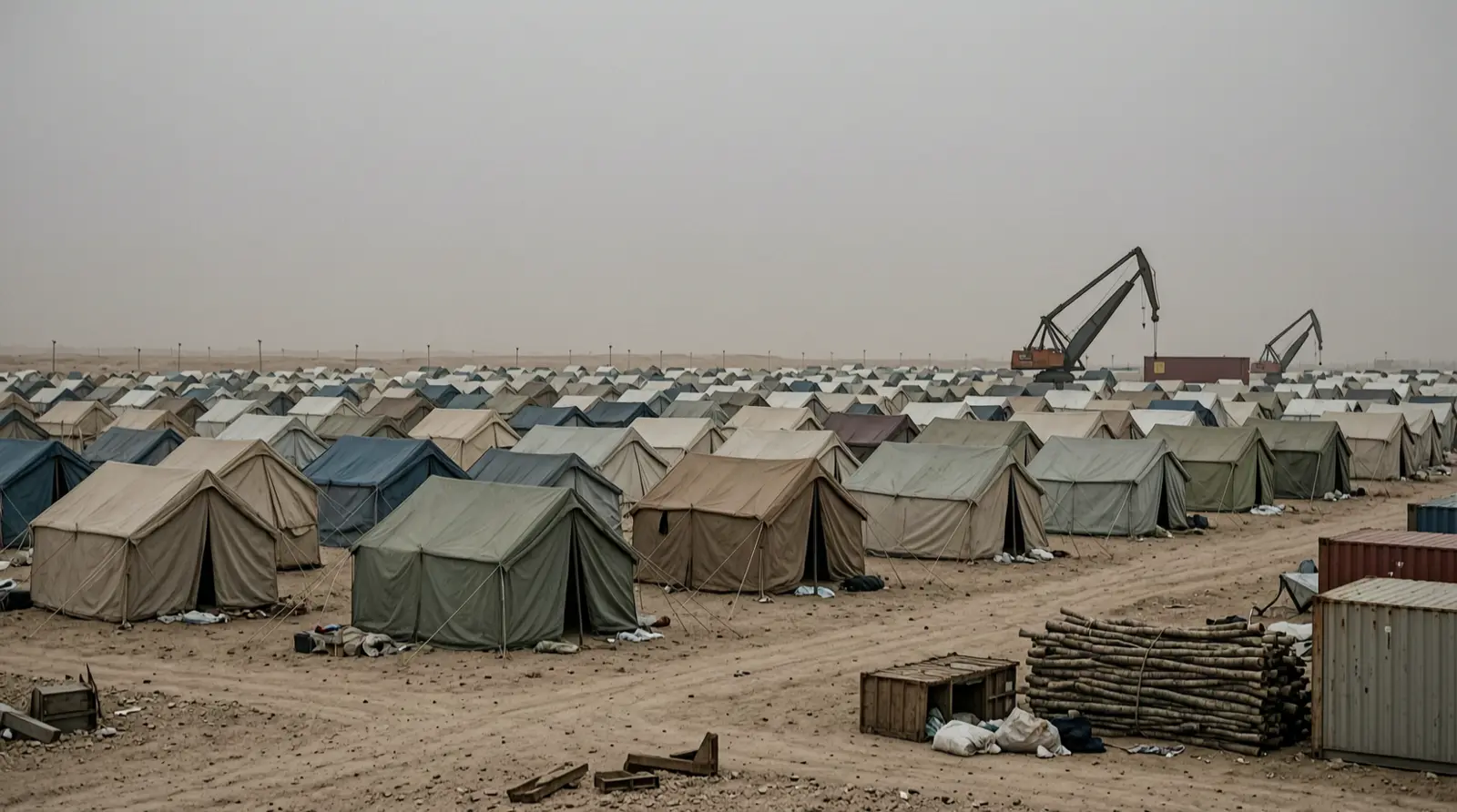
The more concrete risk sits in Yemen. Fighting in Yemen displaced more than 233,000 people across Yemen, according to the reported figures. That is a humanitarian number first, but it also signals pressure on local administration, aid routes and the borders of neighbouring states.
The Gulf Cooperation Council condemned Houthi attacks on Saudi Arabia as fighting intensified. This matters because it moves the conflict from a Yemeni civil-war frame toward a Gulf-security frame. The condemnation puts the bloc’s name behind a Saudi security grievance, which can narrow the space for quiet diplomacy. If attacks on Saudi Arabia become a recurring feature, the risk premium would attach to infrastructure, border security and the political cost of retaliation, not just to Yemeni territory.
The market channel is indirect. A campaign season in Israel, a US endorsement, Iranian rhetoric and Houthi attacks can all remain separate stories. The risk is that they become one operating picture for regional planners, even if the VIX has not yet confirmed that shift.
The volatility gauge is not confirming the crisis
The VIX close at 16.46 is the counterweight. It says investors are not paying heavily for protection against near-term turbulence. The market’s calm does not prove the risk away; it only shows that investors are not yet paying for protection.
The VIX close is one signal. It does not settle whether risk premia are rising in regional debt, shipping insurance or currency markets. That leaves the VIX as a useful but incomplete checkpoint for now. The open question is whether the political and security signals stay contained in statements, or begin to show up in the market price of protection.
- 01The VIX closed at 16.46 on 15 October.
- 02Trump endorsed Netanyahu in a social-media post ahead of the post’s expected 27 October vote.
- 03Iran’s foreign minister said Netanyahu seeks more war before Israel’s elections.
- 04The Gulf Cooperation Council condemned Houthi attacks on Saudi Arabia.
- 05Fighting in Yemen displaced more than 233,000 people.
Interpretation, not reporting. The facts above carry their tiers; this is one correspondent’s reading of them.
The gap between the rhetoric and the VIX is the story. I see three separate risks being bundled into one campaign narrative: Trump’s endorsement of Netanyahu, Araghchi’s accusation that Netanyahu seeks more war, and Houthi attacks that have displaced more than 233,000 people in Yemen. The market’s 16.46 close says investors are not yet paying for a regional shock. That may be rational if the events remain political theatre rather than a change in military posture. But the Houthi attacks on Saudi Arabia are the thread I would watch, because they can turn a Yemeni displacement crisis into a Gulf security problem. If the VIX stays near 16.46 while GCC statements harden, the calm is not proof of safety; it is a bet that the risk stays local. What would change my mind is simple: a sustained move in volatility or a clear shift from rhetoric to cross-border escalation.
— Odile Marchetti
Every claim in this article, and what it rests on
We do not ask you to take our word for it. Each statement below carries its tier and its sources. Where sources disagree, you get both accounts and what would settle it.
The VIX volatility index closed at 16.46 on October 15, 2026.
US President Donald Trump endorsed Benjamin Netanyahu in Israel’s legislative elections.
Trump made the endorsement in a social media post ahead of Israel’s October 27 election.
Israel’s legislative election is scheduled for October 27, 2026.
Iranian Foreign Minister Abbas Araghchi said Benjamin Netanyahu seeks more war before Israel’s elections.
The Gulf Cooperation Council condemned Houthi attacks on Saudi Arabia as fighting in Yemen intensified.
Fighting in Yemen displaced more than 233,000 people across Yemen.
The case against this story
Written by an adversarial reviewer, not the correspondent
The story's overall picture is one of escalating Middle East crisis: a US president endorsing a foreign leader ahead of elections, an Iranian minister warning of war-seeking, intensifying Yemen conflict with mass displacement. Yet the VIX volatility index closing at 16.46 — a low, complacent level — directly contradicts this crisis framing. If genuine war escalation, mass displacement, and political turmoil were unfolding, financial markets would typically reflect elevated risk, not calm. The story strings together unrelated events (Yemen, Israel, Iran, US politics) into a coherent crisis narrative that the market data does not support. Most critically, the entire Trump-Netanyahu-Araghchi thread rests on an unverified Israeli election date of October 27, 2026. Israel does not have fixed election dates; without evidence of a formal election proclamation, the 'ahead of elections' framing collapses, and with it the context for both the endorsement and the Iranian foreign minister's alleged statement. The precise numbers — 233,000 displaced, October 27 election, 16.46 VIX — create an illusion of authority while masking the absence of named sources.
Who benefits from this framing: If readers accept this framing, several parties benefit. Iran and its allies benefit from the narrative that Benjamin Netanyahu seeks more war, reinforcing Tehran's portrayal of Israel as the aggressor. Netanyahu's domestic political opponents benefit from the suggestion that he relies on Donald Trump's foreign endorsement and is escalating conflict for electoral gain. Critics of Trump benefit from portraying him as interfering in another country's elections. Defense and security interests benefit from amplified perceptions of Middle East instability, which justify military readiness and arms spending. Finally, anyone selling geopolitical risk analysis or crisis-themed content benefits from a story that packages unrelated events into a single escalating crisis narrative, especially if the inclusion of a precise but calm VIX figure lends false credibility to the surrounding claims.
Report an error in this article
Read everything for 14 days, free
All three titles in full, the full daily brief, and an alert when a claim about something you follow changes. No card, and it ends by itself.